


Robotic process automation, or RPA, uses software “bots” to do repetitive computer tasks the way a person would: opening applications, copying data, filling in forms and sending emails. No physical robots are involved, just software following clear instructions.
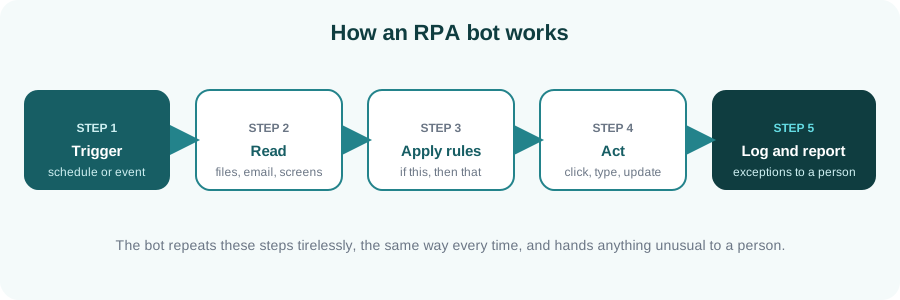
How an RPA bot works
An RPA bot works through the same screens and files that you use, so it can automate work across applications that were never designed to talk to each other. Most bots follow the same five steps.
Where RPA works well
RPA suits work that is repetitive, rule-based and done on a computer. Typical examples include:
- Entering invoice or order data into an accounting system
- Producing and emailing regular reports
- Moving data between two systems that do not integrate
- Carrying out the repetitive steps of employee onboarding
- Reconciling figures between spreadsheets and applications
Is your process a good candidate?
| Good candidate | Poor candidate |
|---|---|
| Follows clear, written rules | Needs frequent human judgement |
| Done often, in high volume | Rare or one-off |
| Uses structured digital data | Relies on handwriting or free-form text |
| Stable, rarely changes | Changes every few weeks |
What does an RPA developer do?
An RPA developer studies a process with the people who run it, designs the automation, builds and tests it, deploys it and keeps it running when applications change. Popular platforms include UiPath, Blue Prism and Automation Anywhere, and the core ideas carry across all of them. Because tools are visual, beginners can build a first working bot much sooner than they could write the same logic in code.
Key takeaways
- RPA bots follow rules to do repetitive work across applications.
- It suits high-volume, stable, rule-based processes with structured data.
- Tidy up the process before you automate it.
- The skills transfer between RPA platforms.
Want to build your first bot?
See our RPA with UiPath course, or tell us about your background and we will suggest a starting point.
Enquire about RPA training