


UiPath and Blue Prism are two of the best-known RPA platforms. If you are starting an automation career, it is natural to ask which one to learn. The good news is that the core ideas carry across both, so the choice is less final than it feels.
What every RPA platform has in common
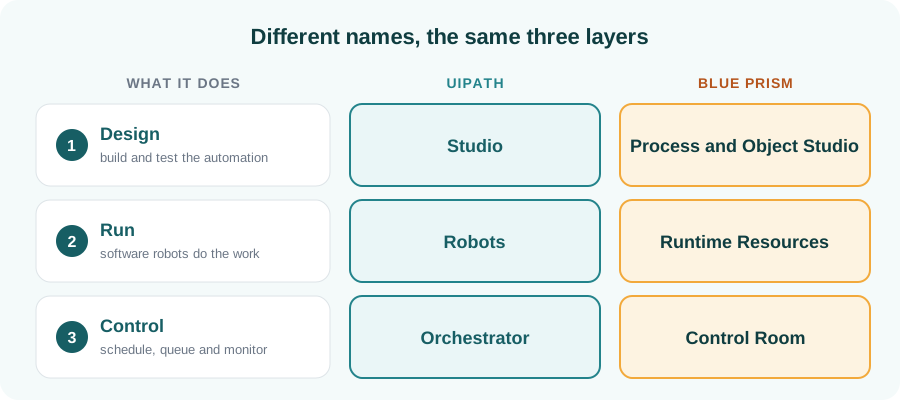
Underneath the product names, RPA tools are built the same way. You design an automation in a development tool, software robots run it, and a control layer schedules, queues and monitors the work. Once you understand these three layers, moving between platforms is mostly a matter of learning new names and menus.
Where they feel different
| UiPath | Blue Prism | |
|---|---|---|
| Design style | Visual workflows built in Studio, with a strong emphasis on recording and drag-and-drop | Process diagrams built from reusable objects, with a more structured, flowchart style |
| Reuse | Reusable workflows and components | Reusable objects that wrap application access |
| Control layer | Orchestrator | Control Room |
| Often found in | A wide range of organisations | Larger enterprises that value governance and structure |
Check the job market where you live. The platform an employer uses matters more than any general ranking. Search a few job listings in your city and see which tool appears most often.
How to choose
- Want the quickest first bot? UiPath’s recorder and visual design are friendly for beginners.
- Targeting a company that already uses one? Learn that one.
- Not sure? Pick either and focus on the fundamentals: selectors, data handling, exception handling and good design. Those transfer.
Key takeaways
- Both platforms use the same three layers: design, run and control.
- The skills transfer, so the first choice is not permanent.
- Let local job listings and your target employer guide the decision.
- Focus on fundamentals and good design, not just the tool.
Train on the platform you need
We offer RPA with AI – UiPath and RPA with AI – Blue Prism.
Enquire about RPA training