


Many people start an IT learning journey by asking which skill is hottest right now. That is a hard question to answer, and the answer keeps changing. A better question is which skill suits the way you like to work.
Start with how you like to work
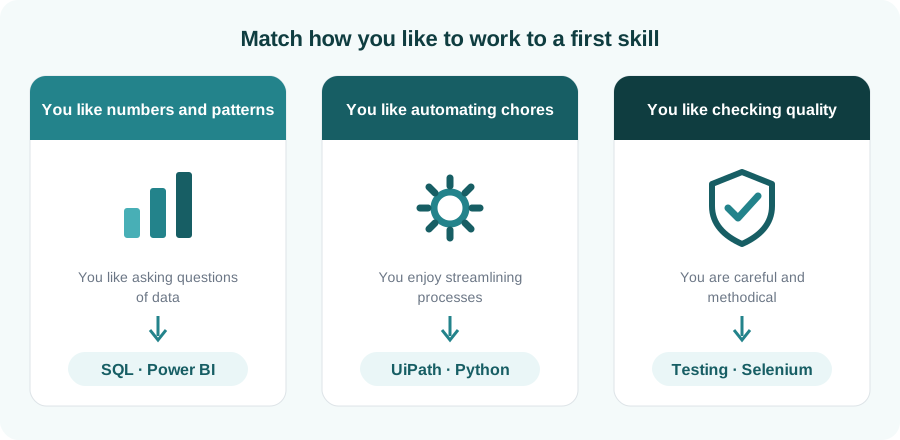
Most entry-level IT skills fall into three broad families. Look at the three cards below and see which one sounds most like you.
Pick a skill with a clear first project
The best first skill is one where you can build something small within a few weeks. A visible result keeps you motivated far more than a long list of topics. Here are realistic first projects for each skill:
| Skill | A good first project |
|---|---|
| SQL | Answer a handful of business questions from a sample sales database. |
| Power BI | Turn a messy spreadsheet into a clean, interactive dashboard. |
| Python | Write a script that renames and organises a folder of files. |
| RPA (UiPath) | Build a bot that copies data from a spreadsheet into a web form. |
| Selenium | Write an automated test that checks a login page. |
Do not try to learn everything at once
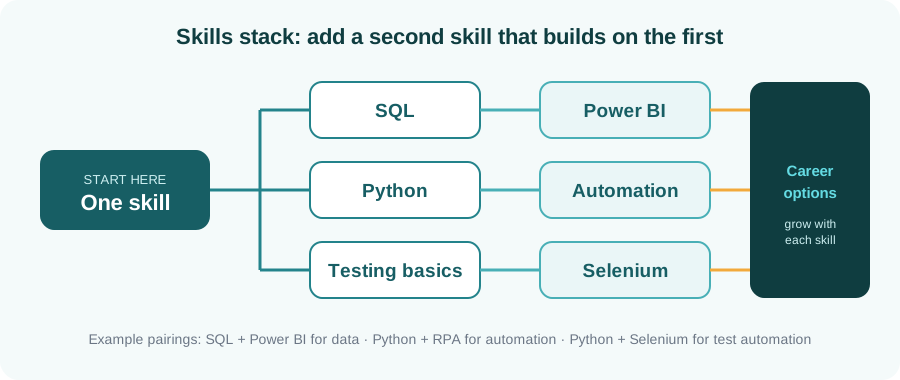
Choose one skill, practise it until you are comfortable, then add a second that builds on it. Skills stack: SQL pairs naturally with Power BI, and Python pairs well with both data work and automation. A focused start beats a scattered one.
Learn with feedback
Self-study works for some people, but a trainer who reviews your work and answers questions saves a lot of time, especially at the beginning. Look for live, hands-on sessions, practice exercises, and a way to prove what you learned.
Key takeaways
- Choose by working style first, trends second.
- Pick a skill where you can finish a small project within weeks.
- Add a second skill that builds on the first, not a random new one.
- Learn with feedback from someone who reviews your work.
Not sure where to begin?
Tell us about your background and goals, and we will suggest a starting point. You can also browse all Omega Academy courses.
Talk to us about your first course