


Reading about Python only gets you so far. The fastest way to become comfortable is to build small, useful things. Here is a simple path from your first lines of code to a tool you might actually use at work.
The learning ladder
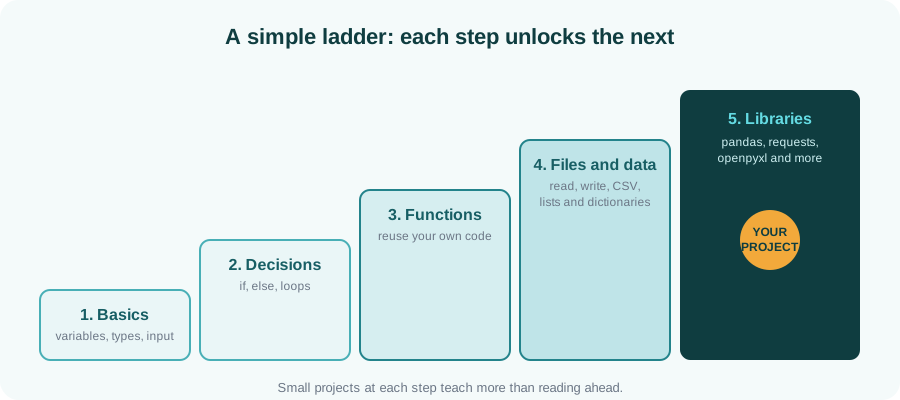
Python is easier when you climb it in order. Each step is small, and each one unlocks the next, so you can build something at every level.
Five beginner projects
None of these needs advanced knowledge. Each one practises a specific skill and results in something you can run.
| Project | What you practise |
|---|---|
| 1. A quiz or guessing game | Input, conditions and loops |
| 2. A tip and bill splitter | Variables, functions and formatting numbers |
| 3. A file organiser | Working with files and folders |
| 4. An expense summary from a CSV file | Reading data, lists and dictionaries |
| 5. An automated spreadsheet report | Using libraries such as pandas |
How to get unstuck
Break it down. If a project feels too big, write the steps in plain English first. Then turn each step into a few lines of code and run it often. Small, working pieces beat a large program that does not run.
Error messages are not failures; they are clues. Read them from the bottom up, check the line number, and search for the message text. Everyone does this, including experienced developers.
Key takeaways
- Learn in order: basics, decisions, functions, files, then libraries.
- Build a small project at every step.
- Plan in plain English before you write code.
- Treat error messages as clues, not as failures.
Learn Python with a trainer
Our Python Programming course guides you through each step with hands-on exercises and feedback.
Enquire about Python training