


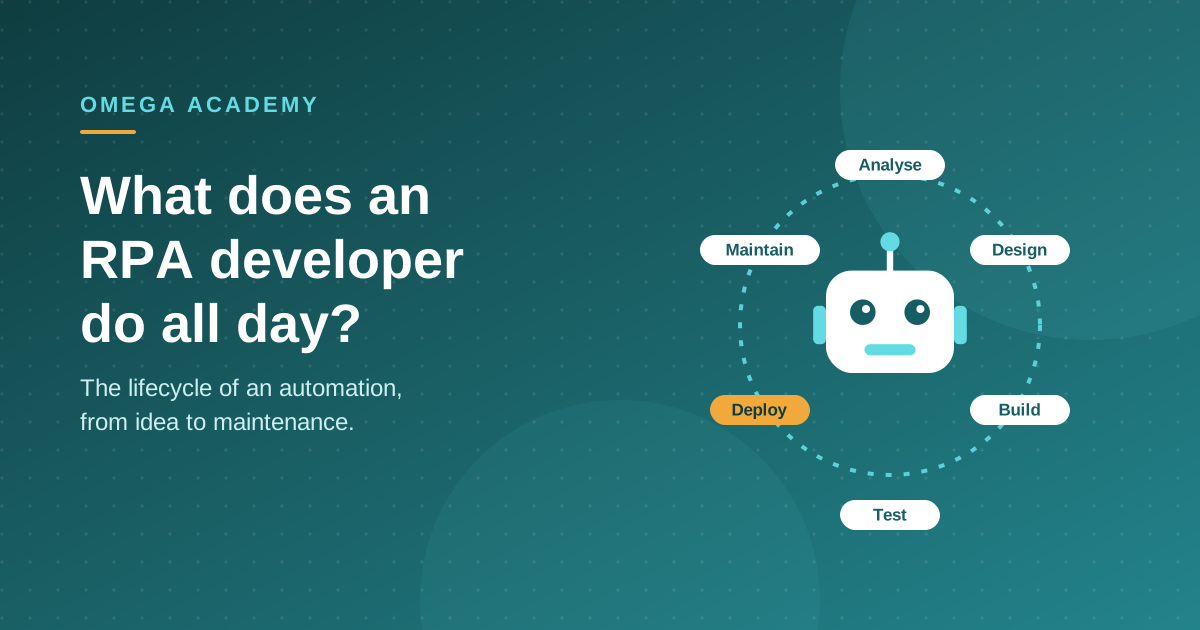
Job titles can hide what the work really looks like. An RPA developer does far more than drag activities onto a canvas. Most of the job is understanding a process well enough to automate it reliably, and then keeping it running.
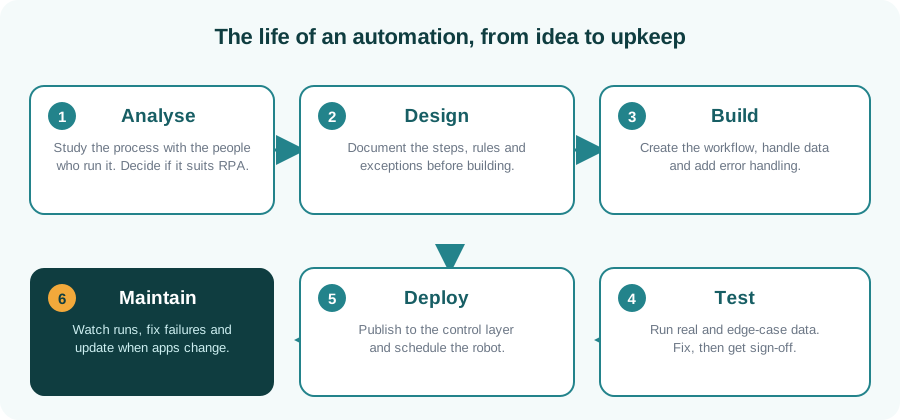
The life of an automation
Almost every RPA project follows the same six stages, whichever platform it uses. A developer moves between them, and often works on several projects at different stages in the same week.
A typical week
| Activity | What it involves |
|---|---|
| Talking to process owners | Walking through a task step by step and asking what happens when something goes wrong. |
| Documenting | Writing down the steps, rules and exceptions so everyone agrees what the robot should do. |
| Building and testing | Creating the workflow, handling data and trying it against real and awkward cases. |
| Monitoring | Checking runs, reading logs and fixing failures, often caused by a changed screen or file. |
The surprise for most newcomers: a large share of the time goes on exceptions, such as a missing file, a slow page or unexpected data. Good developers plan for these from the start.
Skills that matter
- Process thinking: breaking a task into clear, repeatable steps.
- Attention to detail: small rules decide whether a bot works.
- Communication: explaining what can and cannot be automated.
- Tool knowledge: a platform such as UiPath or Blue Prism, plus data handling basics.
Key takeaways
- RPA work follows six stages, from analysis to maintenance.
- Much of the job is talking to people and handling exceptions.
- Process thinking and attention to detail matter as much as the tool.
- Maintenance is ongoing, because applications change.
Start your RPA career
Learn the full lifecycle with RPA with AI – UiPath or RPA with AI – Blue Prism.
Enquire about RPA training