


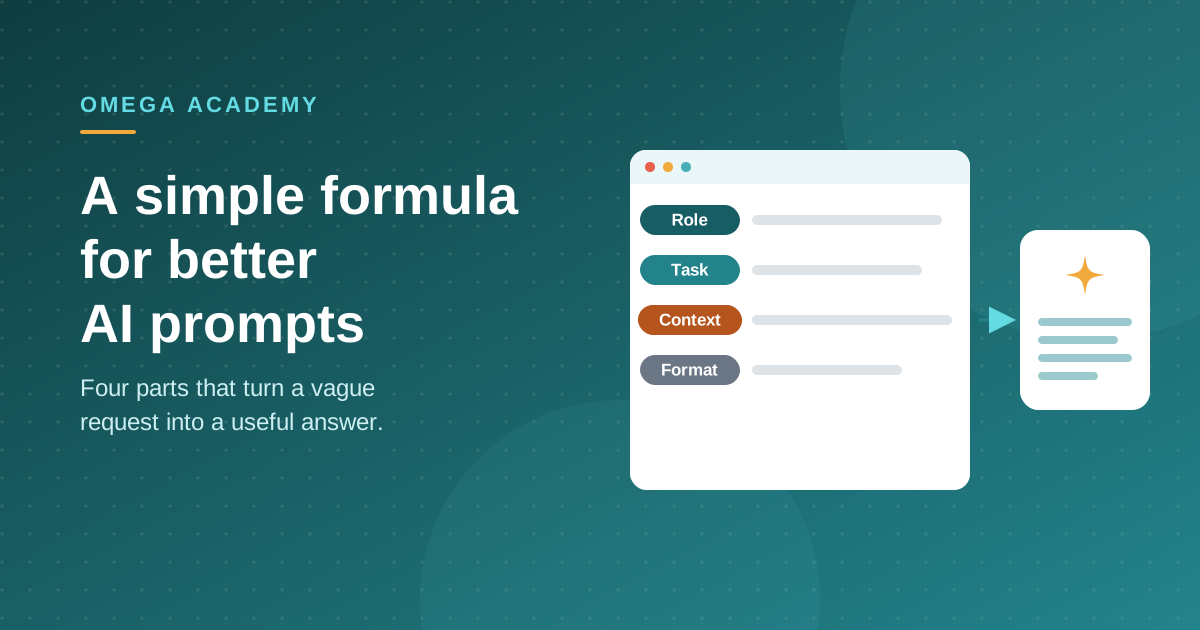
The quality of an AI answer depends heavily on the quality of the question. Most disappointing results come from prompts that are too vague, not from the tool. A simple four-part formula fixes most of that.
The four parts
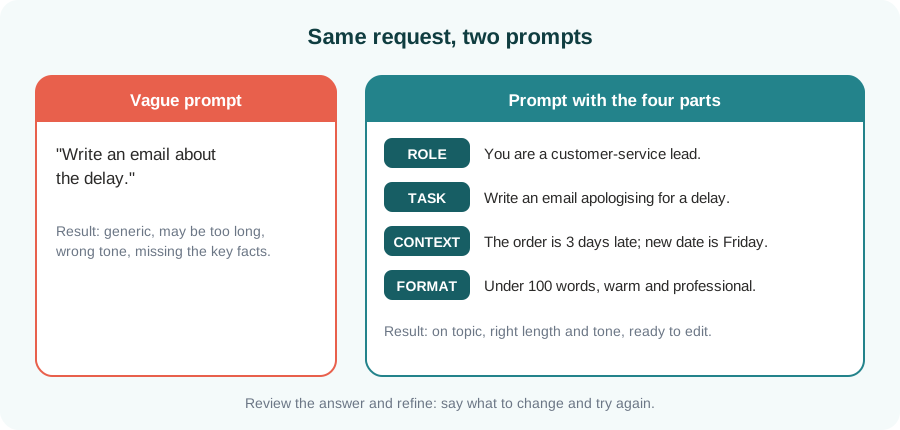
Next time you write a prompt, check that it covers these four things. You do not always need all of them, but the more you include, the less the AI has to guess.
- Role: who the AI should act as, for example a recruiter, a teacher or a customer-service lead.
- Task: the specific thing you want done.
- Context: the facts it needs, such as the audience, the situation and any constraints.
- Format: the shape of the answer, such as length, tone, a list or a table.
See the difference
More examples
| Instead of | Try |
|---|---|
| “Summarise this.” | “Summarise this report for a busy manager in five bullet points, ending with one recommended action.” |
| “Explain SQL.” | “Explain SQL to a complete beginner using a shop’s orders as the example. Keep it under 150 words.” |
| “Give me ideas.” | “Suggest ten titles for a talk on automation for a non-technical audience. Make three of them playful.” |
Refine, do not restart
Treat it as a conversation. If the first answer is not right, say what to change: “shorter”, “less formal”, “add a worked example”. Refining usually beats writing a perfect prompt on the first try.
Remember to check facts, figures and names before you rely on an answer, and never paste confidential or personal data into public AI tools.
Key takeaways
- Use role, task, context and format to make prompts specific.
- Give the AI the facts it needs instead of making it guess.
- Refine the answer step by step rather than starting over.
- Always verify important output and protect confidential data.
Get confident with AI at work
Our Generative AI Fundamentals course covers prompting, practical use and responsible practice.
Enquire about AI training