


RPA is excellent at following clear rules, but it struggles with messy input such as free-form emails or scanned documents. AI is good at reading and judging that kind of content. Combined, they are often called intelligent automation.
What each one brings
| RPA contributes | AI contributes |
|---|---|
| Following fixed steps reliably | Reading unstructured text and documents |
| Working across applications and screens | Classifying and summarising content |
| Scheduling, logging and error handling | Handling variation in how information is written |
| Updating systems of record | Suggesting a decision or a draft |
An example: processing supplier invoices
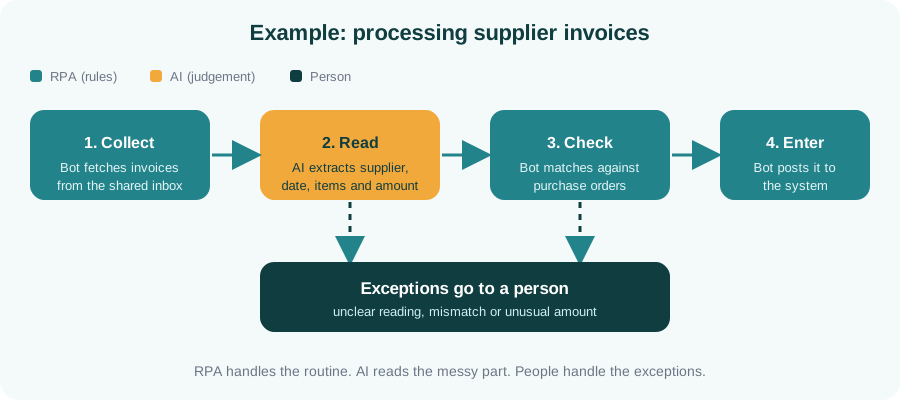
Imagine invoices arriving by email in many different layouts. A bot collects them, AI reads the details from each one, the bot checks them against purchase orders and posts them to the finance system, and anything unclear goes to a person.
Other places this combination helps
- Sorting and routing customer emails and support tickets
- Classifying incoming documents
- Summarising case notes for a reviewer
- Extracting details from forms and applications
Keep a person in the loop
AI can be wrong, so well-designed automations include safeguards. They set a confidence level below which work is sent to a person, keep a clear audit trail of what was done, and make it easy for staff to correct mistakes. The aim is to remove the repetitive load, not to remove accountability.
Key takeaways
- RPA follows rules; AI handles messy content and judgement.
- Together they can automate processes that neither handles well alone.
- Route uncertain cases to people and keep an audit trail.
- Learn both: RPA to build the workflow, AI to make it smarter.
Build skills in both
Explore our RPA with UiPath and Generative AI Fundamentals courses.
Enquire about automation training