


Robotic process automation (RPA) and Python are both used to automate work, so people often wonder which to learn first. They overlap, but they are not the same thing, and the right starting point depends on what you want to do.
What RPA tools are good at
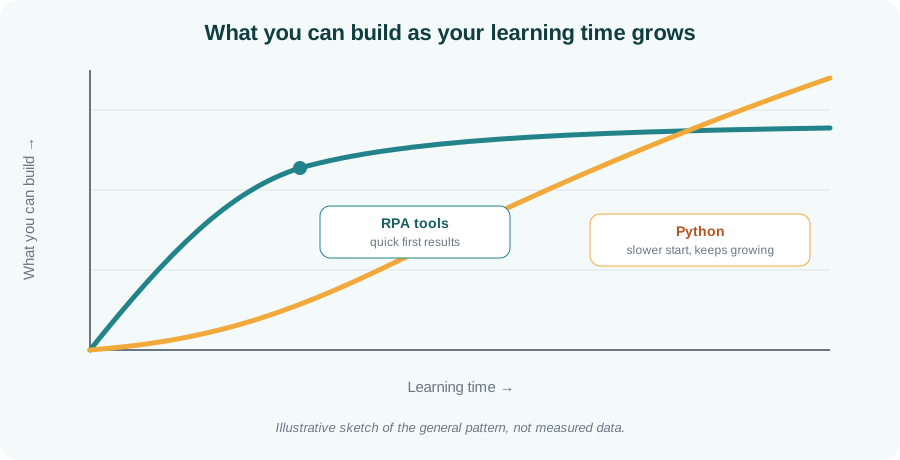
RPA platforms such as UiPath let you build automations visually. They are designed for business processes that move data between applications, fill in forms, read emails and process documents, often through the screen the way a person would. You can get a first working bot quickly, and the tools include scheduling, monitoring and error handling.
What Python is good at
Python is a general-purpose programming language. You can use it to process files, work with data, call web services, build small tools and much more. It takes longer to get started than a visual tool, but it has no ceiling, and the skill carries over to data analysis, testing and many other roles.
Side by side
| RPA (for example UiPath) | Python | |
|---|---|---|
| Style | Visual workflows | Written code |
| First result | Usually quick | Takes longer to get going |
| Best at | Moving data between applications, forms, emails and documents | Data processing, custom logic, web services and files |
| Built-in extras | Scheduling, monitoring, error handling | You add what you need |
| Flexibility | Within the platform | Very high |
| Carries over to | Process automation roles | Data, testing, automation and more |
How to choose
Use this quick guide. If you are unsure, Python basics keep the most options open, and an RPA tool is easy to pick up afterwards.
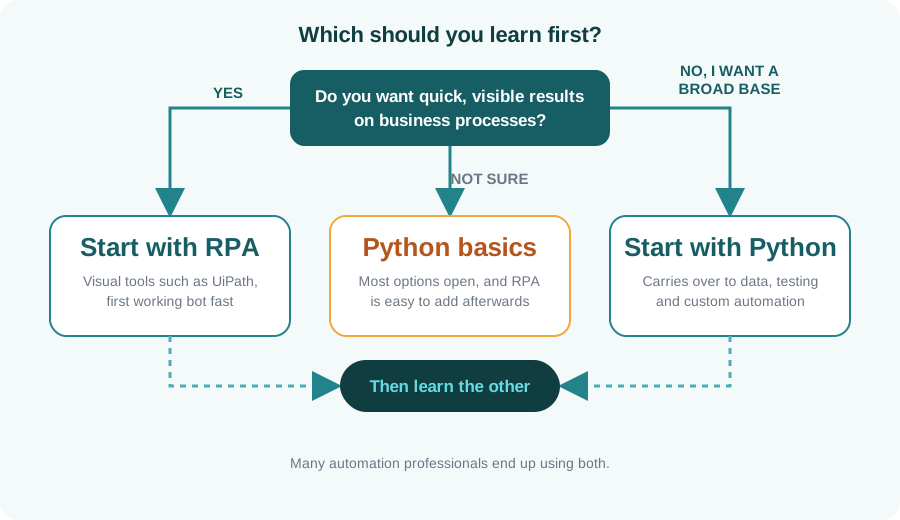
You may end up using both
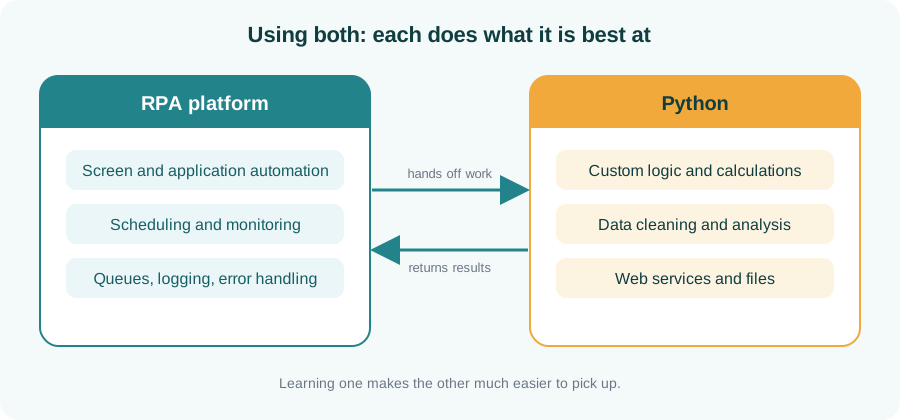
Many automation professionals use both: an RPA platform for user-interface work, scheduling and monitoring, and Python for custom logic and data handling. Learning one makes the other much easier.
Key takeaways
- RPA tools give quick, visible results on business processes.
- Python is slower to start but far more flexible and widely useful.
- Unsure? Begin with Python basics and add RPA later.
- Both together is a common and powerful combination.
Ready to start automating?
See the details of our RPA and Python courses, or ask us which fits your goals.
Enquire about RPA or Python